

ntroduction
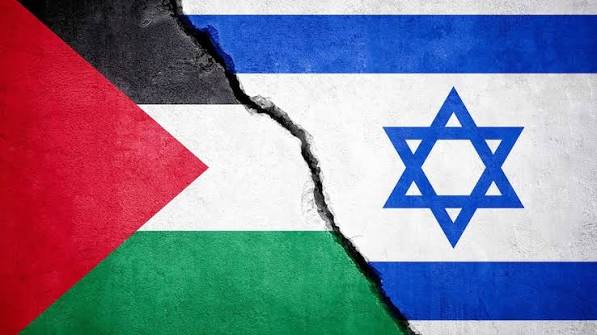
The relationship between Israel and Palestine is one of the most complex and closely watched conflicts in the modern world. It involves competing national movements, historical claims to land, questions of security and self-determination, the status of Jerusalem, Palestinian refugees, Israeli settlements, and decades of war and political negotiations.
The conflict is also deeply human. Israelis have experienced terrorism, displacement, military attacks, hostage-taking, and fear for their security. Palestinians have experienced displacement, occupation, restrictions on movement, settlement expansion, armed conflict, and severe humanitarian suffering, particularly in Gaza. Understanding Israel and Palestine therefore requires looking beyond headlines and recognizing the experiences and concerns of both peoples.
The modern conflict has developed over more than a century. The British Mandate period, the 1947 United Nations partition proposal, the 1948 war, the 1967 war, the First and Second Intifadas, the Oslo peace process, and the wars involving Gaza have all shaped the situation today. The United Nations notes that the 1947 partition plan envisioned separate Jewish and Arab states, with Jerusalem receiving a special international status.
This article explains the Israel and Palestine conflict in an accessible, balanced way, covering its historical background, major disputes, humanitarian dimension, international diplomacy, and the continuing search for a sustainable political solution.
1. Understanding the Israel and Palestine Conflict opposed
At its core, the Israel and Palestine conflict concerns two peoples seeking national rights and security in the same land.
Modern Zionism emerged in Europe in the late 19th century as a movement supporting a Jewish national homeland. Jewish immigration to Ottoman and later British-controlled Palestine increased over time, particularly as European antisemitism and persecution intensified.
At the same time, Palestinian Arabs developed their own national movement and opposed the creation of a Jewish state in territory they regarded as their homeland. Tensions increased as Jewish immigration grew, land ownership changed, and competing political aspirations became more difficult to reconcile.
The British Mandate after World War I added another layer of complexity. Britain supported a Jewish national home while also governing a predominantly Arab population with its own political aspirations.
By the middle of the 20th century, the conflict had become increasingly violent. The United Nations attempted to provide a political framework through its 1947 partition proposal.
The fundamental disagreement has remained remarkably consistent: Israelis generally seek security, recognition, and national self-determination, while Palestinians seek self-determination, freedom, an end to occupation, and recognition of their national rights.
These goals do not necessarily have to be incompatible, but decades of violence and political mistrust have made compromise extremely difficult.
2. The 1947 Partition Plan and the Creation of Israel
One of the most important turning points in the history of Israel and Palestine occurred in 1947.
The United Nations proposed dividing British Mandate Palestine into two states—one Jewish and one Arab—with Jerusalem placed under a special international regime. Jewish political leadership accepted the plan in principle, while Palestinian Arab leaders and surrounding Arab states rejected it, objecting to the proposed division and allocation of territory.
In May 1948, Israel declared independence. War followed between the new Israeli state and neighboring Arab countries.
The war dramatically changed the geography and population of the region. According to the United Nations’ historical account, Israel ultimately controlled about 77% of the territory of Mandatory Palestine. More than half of the Palestinian Arab population fled or were expelled from their homes during the conflict. Palestinians refer to this mass displacement as the Nakba, meaning “catastrophe.”
For Israelis, the establishment of Israel represented national independence and a refuge following centuries of persecution, culminating in the Holocaust.
For Palestinians, the same period is remembered primarily through displacement, loss of homes, and the destruction or depopulation of numerous communities.
These contrasting historical memories remain central to the emotional and political dimensions of the Israel and Palestine conflict.
3. The 1967 War and the Occupation
Another decisive moment came in 1967, when Israel fought Egypt, Jordan, and Syria in the Six-Day War.
Israel captured the Gaza Strip, West Bank, East Jerusalem, Sinai Peninsula, and Golan Heights during the conflict. Sinai was later returned to Egypt following the Egypt-Israel peace process, but the status of the other territories has remained highly contentious.
The West Bank and East Jerusalem became central to the Israeli-Palestinian dispute.
The United Nations describes the West Bank, including East Jerusalem, and the Gaza Strip as part of the Occupied Palestinian Territory. The international status of Jerusalem and Israeli sovereignty claims over East Jerusalem remain disputed internationally.
The 1967 war also created a new political reality. Millions of Palestinians came under Israeli military control, while Israeli settlements were established in territories captured during the war.
Settlement activity has remained one of the most controversial issues in the Israel and Palestine conflict.
Israel has argued that its security requirements and historical connections to the territory must be considered. Palestinians and much of the international community view settlement expansion in the occupied territories as a major obstacle to Palestinian statehood and peace.
4. Why Jerusalem Matters So Much
Jerusalem is one of the most sensitive issues between Israel and Palestine.
The city has enormous religious, historical, cultural, and political significance for Jews, Muslims, and Christians.
For Israelis, Jerusalem is the capital and a central part of Jewish history and identity. For Palestinians, East Jerusalem is widely regarded as the future capital of a Palestinian state.
The Old City contains major religious sites, including the Western Wall, the Al-Aqsa Mosque compound, and the Church of the Holy Sepulchre. Because these sites are sacred to different religious communities, political disputes around access, sovereignty, policing, and religious practice can quickly become sources of tension.
Jerusalem’s importance means that any comprehensive peace agreement between Israel and Palestine would almost certainly need to address the city’s borders, sovereignty, security arrangements, and access to religious sites.
The challenge is finding an arrangement that protects the rights and security of the city’s different communities while resolving competing national claims.
5. Gaza, Hamas, and the Humanitarian Crisis
Gaza has become one of the most visible parts of the Israel and Palestine conflict.
The Gaza Strip is a densely populated Palestinian territory on the Mediterranean coast. Hamas took control of Gaza in 2007 after winning Palestinian legislative elections the previous year and subsequently defeating forces loyal to the Palestinian Authority in internal fighting.
Hamas is designated as a terrorist organization by several governments, including the United States and European Union. Israel regards Hamas as a major security threat.
The group has carried out attacks against Israeli civilians and military targets, including the Hamas-led attack of October 7, 2023, during which approximately 1,200 people in Israel were killed and hostages were taken, according to UN reporting.
Israel responded with a large-scale military campaign in Gaza.
The consequences for Palestinian civilians have been devastating. UN humanitarian reporting in 2026 continues to describe severe shortages, displacement, damaged infrastructure, limited access to health services, water and sanitation problems, and significant humanitarian needs in Gaza.
It is important to distinguish between Palestinian civilians and Hamas. Likewise, criticism of Israeli government policies should not be treated as hostility toward Israeli civilians or Jewish people.
The humanitarian dimension is one of the most important parts of understanding Israel and Palestine, because ordinary people on both sides have endured death, displacement, fear, and trauma.
6. The West Bank and Israeli Settlements
The West Bank is another major part of the Israel and Palestine dispute.
Unlike Gaza, where Hamas has exercised de facto authority, parts of the West Bank are administered by the Palestinian Authority, while Israel maintains varying degrees of military and administrative control.
The West Bank also contains Israeli settlements.
The United Nations reports that Israeli military operations, settlement expansion, demolitions, movement restrictions, and settler violence continue to affect Palestinian communities. In July 2026, UN OCHA reported that settler attacks had accounted for 55% of Palestinian injuries recorded in the West Bank during 2026 up to that point.
For Palestinians, settlement expansion can mean loss of access to land, homes, agricultural areas, roads, and resources. Palestinians and international organizations have repeatedly argued that settlements make the creation of a contiguous Palestinian state more difficult.
Many Israelis, however, emphasize historical, religious, and security connections to parts of the West Bank and point to concerns about attacks originating from Palestinian areas.
The settlement issue is therefore closely connected to security, borders, land ownership, Palestinian statehood, and the future political geography of the region.
7. The Major Issues That Keep Israel and Palestine Apart
There is no single disagreement that explains the entire conflict. Several interconnected issues have repeatedly prevented a final peace agreement.
Borders and Territory
Israel and Palestinians disagree over the borders of a future settlement. The boundaries associated with the pre-1967 lines, land swaps, settlement blocs, and security arrangements are frequently discussed in diplomatic proposals.
Palestinian Statehood
Most international peace frameworks envision some form of Palestinian self-determination or statehood. However, disagreements remain over borders, sovereignty, security, Jerusalem, settlements, and the political relationship between Gaza and the West Bank.
Israeli Security
Israeli governments have consistently emphasized the need to prevent attacks against Israeli civilians and to ensure that any future Palestinian political arrangement cannot become a platform for armed attacks.
The October 7, 2023 attack significantly strengthened security concerns among many Israelis.
Palestinian Freedom and Self-Determination
Palestinians generally emphasize the need to end occupation, restrictions, displacement, settlement expansion, and other forms of control they experience as limiting their political and personal freedom.
Refugees
Millions of Palestinians are registered as refugees as a result of displacement connected to the 1948 and later conflicts.
The right of return, compensation, resettlement, and recognition of Palestinian refugee claims remain extremely sensitive issues.
Jerusalem
Both peoples claim Jerusalem as an important national capital. Any agreement must address sovereignty and access while protecting religious freedom.
Water and Resources
Water, agricultural land, infrastructure, electricity, roads, and economic access are also important components of the conflict, particularly in the West Bank.
These issues are interconnected. Progress on one may depend on progress on several others.
8. The Oslo Accords and the Search for Peace
The Israel and Palestine peace process has produced several important diplomatic milestones.
The Oslo Accords of the 1990s represented one of the most significant attempts to establish a political framework for Israeli-Palestinian peace.
Israel and the Palestine Liberation Organization recognized each other, and the Palestinian Authority was established with limited self-government responsibilities in parts of the West Bank and Gaza.
The process initially generated considerable hope.
However, negotiations faced serious obstacles, including disagreements over settlements, Jerusalem, borders, security, refugees, and political violence. The assassination of Israeli Prime Minister Yitzhak Rabin in 1995 was another devastating blow to the peace process.
The Second Intifada, which began in 2000, brought another period of intense violence.
Over subsequent years, repeated negotiations and international initiatives attempted to revive the peace process, but no final agreement was reached.
The failure of previous negotiations has contributed to deep skepticism among both Israelis and Palestinians about whether diplomatic efforts can deliver lasting peace.
9. The Two-State Solution and Other Possible Futures
The two-state solution has historically been the most widely discussed international framework for resolving the Israel and Palestine conflict.
Under a conventional two-state model, Israel would exist alongside an independent Palestinian state, with negotiations determining borders, security arrangements, Jerusalem, refugees, settlements, and other final-status questions.
Supporters argue that this approach could provide both peoples with national self-determination.
However, implementing it has become increasingly difficult because of settlement expansion, territorial fragmentation, political divisions, security concerns, and the lack of trust between the parties.
Other ideas are sometimes discussed, including various forms of a single state or confederation. Each model presents major political, legal, security, and demographic challenges.
A durable solution would ultimately need to address the legitimate rights and security concerns of both Israelis and Palestinians.
It would also require political leadership willing to make difficult compromises and populations willing to accept that neither side is likely to achieve every maximalist objective.
10. What Peace Could Require
A lasting peace between Israel and Palestine would require much more than simply stopping military operations.
A sustainable settlement would likely need several components:
- Protection of civilians and respect for international humanitarian law.
- Reliable security arrangements for Israelis and Palestinians.
- Palestinian political self-determination.
- Recognition of Israel’s right to exist and live in security.
- A negotiated approach to borders and territory.
- A workable arrangement for Jerusalem.
- A solution to the Palestinian refugee question.
- Serious consideration of settlements and their future.
- Reconstruction and economic development in Gaza.
- Freedom of movement and access to essential services for Palestinians.
- Strong institutions capable of preventing corruption and political violence.
- International guarantees and monitoring where necessary.
- A long-term effort to rebuild trust between communities.
Humanitarian assistance can save lives, but it cannot by itself resolve the political causes of the conflict.
UN OCHA reported in July 2026 that humanitarian needs in Gaza and the West Bank remained severe, with ongoing displacement, access restrictions, shortages, and damage to essential services.
At the same time, Israeli civilians need protection from attacks and hostage-taking, and any political process must take Israeli security concerns seriously.
The most difficult part may therefore be political rather than technical: convincing both societies that coexistence offers a better future than continued confrontation.
Conclusion
The history of Israel and Palestine cannot be reduced to a single event, a single political leader, or a simple explanation. It is the result of more than a century of competing national movements, wars, displacement, occupation, terrorism, political decisions, failed negotiations, and deeply rooted historical memories.
For Israelis, the conflict is inseparable from the desire for security, national independence, and protection from persecution and violence. For Palestinians, it is inseparable from displacement, occupation, restrictions, loss of land, and the demand for self-determination.
The humanitarian crisis has made the need for a political solution even more urgent. Recent UN reporting continues to document severe conditions in Gaza and significant displacement and protection concerns in the West Bank.
Understanding Israel and Palestine does not require choosing between compassion for Israelis and compassion for Palestinians. A serious understanding requires recognizing the humanity, rights, fears, and losses of both peoples.
The ultimate challenge is transforming a conflict shaped by generations of fear and mistrust into a political arrangement in which Israelis and Palestinians can live with security, dignity, freedom, and genuine self-determination.
Frequently Asked Questions About Israel and Palestine
What is the Israel and Palestine conflict about?
The Israel and Palestine conflict concerns competing national claims, territory, security, Palestinian statehood, Israeli settlements, Jerusalem, refugees, and the rights and political future of both peoples.
When did the Israel and Palestine conflict begin?
Its modern roots developed during the late 19th and early 20th centuries, particularly with the growth of Jewish and Palestinian Arab national movements. Major turning points include the British Mandate, the 1947 UN partition proposal, the 1948 war, and the 1967 war.
What happened in 1948?
Israel declared independence in May 1948, followed by war involving neighboring Arab states. Hundreds of thousands of Palestinians were displaced, an event Palestinians call the Nakba. Israel emerged as an independent state and controlled significantly more territory than the UN partition proposal had assigned to the proposed Jewish state.
Why is Jerusalem important to Israel and Palestine?
Jerusalem is sacred to Jews, Muslims, and Christians. Israel considers Jerusalem its capital, while Palestinians generally seek East Jerusalem as the capital of a future Palestinian state. The city’s final political status remains one of the central issues in peace negotiations.
What is the two-state solution?
The two-state solution generally refers to establishing an independent Palestinian state alongside Israel, with negotiated arrangements for borders, security, Jerusalem, refugees, and settlements.
What is Hamas?
Hamas is a Palestinian Islamist political and armed organization that has controlled Gaza since 2007. Several governments, including the United States and European Union, designate Hamas as a terrorist organization. The group has carried out attacks against Israeli targets and has fought repeated conflicts with Israel.
Why is Gaza such an important part of the conflict?
Gaza is a densely populated Palestinian territory that has experienced repeated wars, severe restrictions, displacement, and humanitarian crises. The territory has been controlled internally by Hamas since 2007, while Israel has maintained significant control over access and security-related matters.
Are Israel and Palestine two separate countries?
Israel is a sovereign state and a member of the United Nations. Palestine has recognition as a state from many countries and holds non-member observer state status at the United Nations, but it does not exercise full sovereign control over the territories it claims.
Can Israel and Palestine achieve peace?
Peace remains possible, but achieving it requires difficult compromises on security, borders, settlements, Jerusalem, refugees, Palestinian statehood, governance, and economic reconstruction. A durable settlement would also require sustained international support and political willingness on both sides.
Why is it important to learn about Israel and Palestine?
Learning about Israel and Palestine helps people understand one of the world’s most consequential conflicts without relying solely on slogans or isolated events. Historical context makes it easier to evaluate competing claims, understand humanitarian consequences, and recognize why finding a lasting solution is so difficult.